English translation updated . This article reflects the source material at its original publication date. Read the Chinese source.
1. Biofilms
Composition and formation
A biofilm is a microbial community embedded in extracellular polymeric substances (EPS). The source lists DNA and RNA at less than 1% each, structural proteins at 1–60%, lipids at 1–40%, enzymes and extracellular polysaccharides at 40–95%. These ranges describe different matrices and should not be added as one fixed composition. The matrix helps protect bacteria from predation and physical, chemical and biological stresses. Microorganisms themselves typically account for 2–35% of biofilm volume; channels transport water, gases and nutrients through the structure (Figure 1a).
Formation begins with attachment to a living or nonliving surface, influenced by physical forces and bacterial appendages such as pili or flagella. Attached cells form a layer and produce matrix. Chemical signalling, growth and division then generate three-dimensional microcolonies. As the biofilm matures, cell clusters expand and channels or voids develop. In later stages, changes including increased expression of motility-related genes can support detachment and dispersal to new surfaces (Figure 1b).
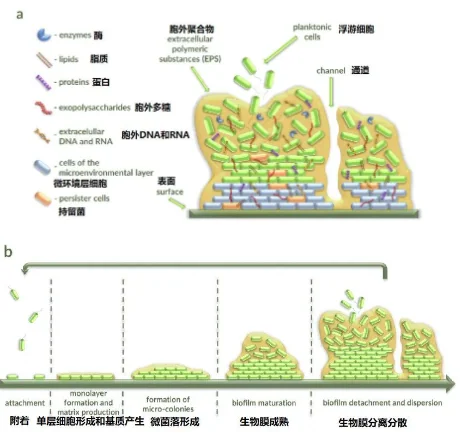
Figure 1. Biofilm composition (a) and formation (b), reproduced in the original article from reference 1.
Why biofilms matter
Biofilms occur across many bacterial species and are associated with persistent infections. The archived article attributes an estimate of more than 80% of microbial infections to an NIH statement, but does not identify the underlying NIH publication. This percentage therefore remains a source claim requiring confirmation.
Biofilms on medical devices, prostheses, infusion tubing, endoscopes, urinary catheters and wounds may act as reservoirs for infection. The source reports that bacteria in some biofilms can have approximately 1,000-fold lower antibiotic susceptibility than planktonic counterparts. This is a context-dependent observation rather than a universal value. Biofilms may also impede immune clearance, antiseptics and disinfectants.
Approaches to biofilm control
Common approaches include cleaning or removing contaminated devices, including implanted devices where clinically appropriate, and disrupting established biofilms. Figure 2 summarizes strategies discussed in the source review.
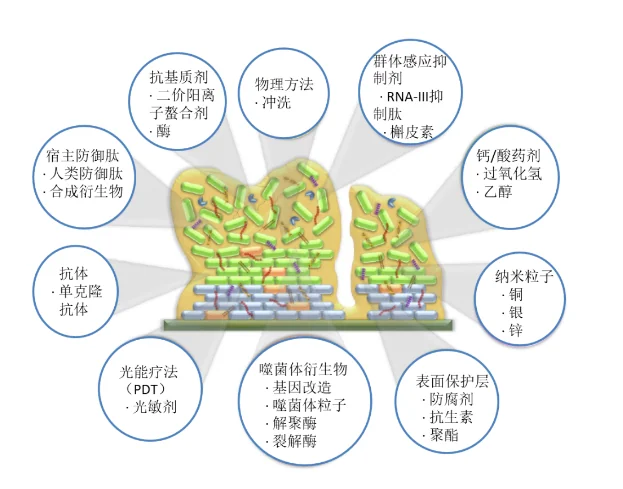
Figure 2. Strategies against biofilms, from reference 1.
2. Phage-derived proteins
Phage-derived antibacterial proteins include peptidoglycan hydrolases, often called endolysins or lysins. Endolysins degrade bacterial peptidoglycan, contributing to cell lysis and release of newly assembled phage particles. Virion-associated peptidoglycan hydrolases (VAPGHs) instead act locally during infection, helping particles traverse the bacterial cell wall.
Some phages encode polysaccharide depolymerases that degrade carbohydrates in bacterial surface structures. Extracellular polysaccharides can protect bacteria from drying, antibiotics and host defences. Depolymerases can facilitate receptor access and phage infection, including in biofilms. Holins act on the cytoplasmic membrane and support endolysin-mediated lysis.
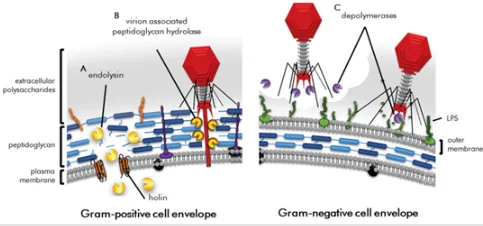
Figure 3. Phage-derived enzyme types, from reference 2.
Polysaccharide depolymerases
Many phages encode enzymes that degrade extracellular polysaccharides or carbohydrate components of lipopolysaccharide (LPS). The source review discusses depolymerases of tailed double-stranded DNA phages, associated with tailspike proteins or present as diffusible enzymes. Pires and colleagues reported that their genes commonly occur within or near structural-gene regions, including those encoding tail fibres or baseplates.
These enzymes recognize, bind and degrade surface polysaccharides, exposing receptors needed for infection. They are broadly divided into hydrolases and lyases. Substrates can include capsular polysaccharides, LPS, O-polysaccharides and extracellular polysaccharides; some enzymes act on other polymers. Hydrolytic activities discussed in the source include sialidase, xylosidase, acetyl-related, rhamnosidase, glucanase and peptidase activities. Lyases acting on hyaluronate, alginate or pectin use β-elimination, generating a new double bond.
Depolymerases are being investigated as alternatives or adjuncts to antibiotics, particularly against multidrug-resistant bacteria. Their substrate specificity may limit effects on unrelated bacterial communities. They may also be engineered to modify activity or used for bacterial detection.
They can be delivered as domains within phage tail proteins or as isolated enzymes. Whole phages can multiply in susceptible hosts and deliver additional enzyme-bearing particles to a target. However, phage selection must address resistance and the potential for genetic transfer. Purified enzymes do not replicate and are comparatively stable genetically; the source proposes that resistance may be less likely in some settings. These are research considerations, not proof of clinical superiority.
Disrupting biofilms
EPS contributes to biofilm structure, function and virulence. Gutiérrez and colleagues studied Dpo7 from phage vB_SepiS-phiIPLA7 against staphylococcal biofilms. The source reports EPS matrix levels of 31% of control for S. epidermidis ASLD1 and 75% for LO5081. Pretreatment of polystyrene with Dpo7 also reduced subsequent biofilm formation or activity. Dpo7 could inhibit formation and disperse biofilms of different staphylococcal strains.
The article also describes Dpo42, a K. pneumoniae phage depolymerase active against K47 capsule, with fewer biofilm-associated bacteria after treatment at 10 μg/mL, and activity against EPS from strain 2226. The phage identifier is corrupted by an unrelated link in the original page, so it is not reconstructed here. A depolymerase encoded by P. aeruginosa phage IME180 was reported to inhibit biofilm formation and reduce biomass in established biofilms.
Combination approaches
The following table preserves the experimental combinations and outcomes summarized in the archived article. They are laboratory research examples, not treatment recommendations.
| Enzyme or phage | Combined agent | Biofilm organism or strain | Reported outcome versus individual treatment |
|---|---|---|---|
| KPO1K2-encoded depolymerase | Ciprofloxacin | K. pneumoniae B5055 | Biofilm eradication in the experimental system |
| KPO1K2-encoded depolymerase | Gentamicin | K. pneumoniae B5055 | Fewer bacteria in early biofilms |
| Dpe42, as named in the source table | Polymyxin | K. pneumoniae 2226 | Reduced bacterial counts |
| KP34p57 | Ciprofloxacin | K. pneumoniae 77 | Reduced colony counts |
| KP34p57 | Ciprofloxacin and φkp15, which lacks a depolymerase | K. pneumoniae 77 | Reduced colony counts |
| φEnt-encoded depolymerase | Disinfectant | Enterobacter agglomerans strain Ent, as named in the source | Greater biofilm reduction |
| KPO1K2-encoded depolymerase | Cobalt sulfate | K. pneumoniae B5055 | Reduced bacterial counts |
| KPO1K2-encoded depolymerase | Xylitol | K. pneumoniae B5055 and P. aeruginosa PAO | Greater biofilm reduction |
| Phage EC3a | Honey | E. coli CECT434 | Greater antibiofilm activity |
The source uses “Dpo42” in its text and “Dpe42” in the table; this naming discrepancy requires confirmation against reference 1.
3. Outlook
Depolymerases alone or in combination with other agents show experimental antibiofilm activity. Producing and purifying phage-derived enzymes can nevertheless be complex and more costly than using whole phages. Further work is needed before these approaches can be translated into established clinical treatments.
References
- Topka-Bielecka G, Dydecka A, Necel A, et al. Bacteriophage-Derived Depolymerases against Bacterial Biofilm. Antibiotics. 2021;10(2):175. doi:10.3390/antibiotics10020175.
- Roach DR, Donovan DM. Antimicrobial bacteriophage-derived proteins and therapeutic applications. Bacteriophage. 2015;5(3):e1062590. doi:10.1080/21597081.2015.1062590.