English translation updated . This article reflects the source material at its original publication date. Read the Chinese source.
1. Building a kingdom
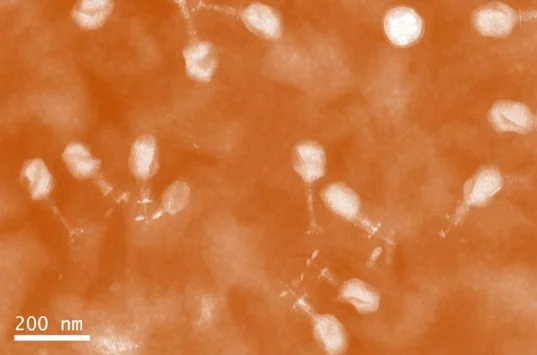
Mycobacteria are an ancient and difficult group of pathogens. They include Mycobacterium tuberculosis, which causes tuberculosis; Mycobacterium leprae, which causes leprosy; and nontuberculous mycobacteria such as Mycobacterium abscessus and Mycobacterium chelonae. Their ability to live inside cells and their extensive drug resistance make mycobacterial diseases particularly difficult to treat. Professor Graham Hatfull has worked in the Department of Biological Sciences at the University of Pittsburgh since 1988, focusing on mycobacteria and their bacteriophages. Phages are viruses that infect bacteria; under an electron microscope, they look like tiny robots on the nanometer scale. Hatfull's first project after taking up his position was to sequence the genome of mycobacteriophage L5. At the time, that work took a full five years. He could hardly have imagined that the SEA-PHAGES program—Science Education Alliance–Phage Hunters Advancing Genomic and Evolutionary Science—which he leads would eventually sequence hundreds of phages every year.
Hatfull titled his lecture for the 2020 Peter Wildy Prize “Who wouldn't want to discover a new virus?” [1]. The Microbiology Society awards the prize each year to someone who has made an outstanding contribution to microbiology education and communication. Isolating bacterial viruses from nature may indeed be one of the safest and most accessible ways to discover a new virus. With that goal in mind, hundreds of undergraduates from around the world join SEA-PHAGES each year. They isolate mycobacteriophages from samples collected in different regions and environments, sequence and characterize them, give them names, and add them to an expanding collection. By the time of this account, Hatfull's mycobacteriophage collection contained nearly 20,000 isolates, more than 4,000 of which had been sequenced.
2. A breakthrough: the first treatment with genetically engineered phages
Shortly before Christmas in 2017, 15-year-old Isabelle was discharged from Great Ormond Street Hospital for Children in London with few options left. A double lung transplant had relieved the suffering associated with cystic fibrosis, but a subsequent M. abscessus infection had defeated every treatment attempted. She had to return home for palliative care. Her mother, however, was unwilling to give up. Having learned that phage therapy might offer a last possibility, she persisted, and Dr. Helen Spencer contacted Graham Hatfull through a colleague to ask for help.
After infecting a bacterium, a phage can multiply in large numbers, lyse the cell and release progeny that repeat the process. It sounds like an ideal way to treat a bacterial infection. In fact, phage discoverer Félix d'Herelle had pioneered phage therapy more than a century earlier. Hatfull, however, understood the obstacles: lytic phages can be extremely selective about their hosts, and many other phages are temperate, integrating into the bacterial genome rather than usually following the lytic pathway. Most phages in his collection had been isolated using the relatively fast-growing, nonpathogenic bacterium Mycobacterium smegmatis. Whether they could cross the species boundary and lyse M. abscessus remained uncertain.
Fortunately, three phages in the collection—Muddy, BPs and ZoeJ—showed activity against Isabelle's M. abscessus. Only Muddy was lytic; the other two were temperate. Using Muddy alone was considered likely to select for phage resistance. Time was running out. Another young patient whose request had arrived at around the same time died before phage treatment could begin. Hatfull had to make a decision: use genetic engineering to turn BPs and ZoeJ into lytic phages. The technique was routine in the laboratory, but genetically engineered phages had never before been used in a human patient.
The resulting cocktail contained Muddy and the engineered phages BPs33ΔHTH-HRM10 and ZoeJΔ45. The account describes each dose as containing one billion lytic phages. Rebekah Dedrick, a researcher in Hatfull's team, personally took the preparation to London. Isabelle received phages in wet dressings on her skin and by intravenous administration. From day 9, she continued twice-daily intravenous treatment at home. As treatment progressed, M. abscessus was no longer detected in her lungs or blood. Although it could occasionally still be cultured from swabs of skin nodules, her transplant incision and skin lesions improved markedly. She gained weight, the inflamed areas around the infection sites became substantially smaller, and measures of lung and liver function improved. A year later, she still needed daily phage injections, but in many respects she had returned to normal life. Apart from sweating and flushing when treatment first began, no other adverse reactions were reported during the course described.
In May 2019, the joint clinical and research team published the case in Nature Medicine [2], attracting immediate attention. The pressure on the team was as great as the significance of attempting the first treatment with genetically engineered phages. Fortunately, the treatment succeeded in this case. Three phages found through an educational program, with modifications made in the laboratory, had helped save Isabelle's life. Further cases followed.
3. Progress through successes, setbacks and lessons
In July 2021, Hatfull's team published another report in Nature Medicine [3], describing work with Dr. Keira Cohen of the Johns Hopkins University School of Medicine. An 81-year-old patient with bronchiectasis had a pulmonary M. abscessus infection whose bacterial isolate was also susceptible to Muddy, BPs33ΔHTH-HRM10 and ZoeJΔ45. The patient therefore received the same intravenous phage regimen used for Isabelle. No adverse reactions occurred during six months of treatment, but neither the infection indicators nor the clinical symptoms improved. The M. abscessus burden in sputum initially fell tenfold during the first month, then rose rapidly from the second month onward, even exceeding its pretreatment level. Bacteria recovered after treatment showed no change in antibiotic resistance. Their susceptibility to ZoeJΔ45 was slightly reduced, but their susceptibility to Muddy and BPs33ΔHTH-HRM10 remained unchanged, suggesting that phage resistance was not the main reason for failure. Further investigation suggested that the patient's sustained production of high levels of circulating antibodies that neutralized all three therapeutic phages might explain the failure. During Isabelle's treatment, by contrast, no neutralizing antibodies to the three phages had been detected over at least nine months of monitoring. This raised the possibility that the immunosuppression required after her lung transplant had helped the phages survive and contributed to the successful outcome.
On 3 May 2022, a collaboration between Hatfull's team and Dr. Jessica Little of Harvard Medical School reported a further advance: the first use of phage therapy for M. chelonae infection [4]. The Nature Communications paper described a patient with seronegative arthritis who had received long-term immunosuppressive treatment and developed an infection of the left arm with a drug-resistant strain of M. chelonae. Nearly six months of antibiotic therapy had failed and had caused several drug toxicities. After the team sought phage treatment, Muddy again proved useful. It was the only phage found to lyse this patient's isolate, but its lytic activity was strong, and in vitro experiments suggested that resistance did not arise readily. The patient began twice-daily intravenous Muddy treatment. Antibiotics continued, and the largest abscess was surgically removed. Within two weeks of starting phage therapy, inflammation and nodularity of the skin lesions had decreased substantially. Improvement continued over subsequent months, with reductions in cutaneous and subcutaneous soft-tissue lesions and repeated negative cultures for M. chelonae. The source account reports neutralizing antibodies to Muddy in serum sampled on days 3 and 17 and at week 16, but these responses did not negate the overall clinical improvement. Relying on Muddy alone against a mycobacterial infection might have failed, yet no other phage was available. In this case, the feared emergence of phage-resistant bacteria was not observed, and treatment was successful.
The source describes a further report, published ten days later in Cell, as that journal's first phage-therapy case report [5]. A particular strength of Hatfull's study was that over a treatment period of more than 500 days, comprehensive molecular, metabolic and imaging assessments provided evidence of phage-mediated bacterial killing in the patient. Beyond direct bacterial culture results, the team used quantitative bacterial nucleic-acid measurements, mycobacteria-specific cell-wall markers in urine, and blood levels of M. abscessus-specific antibodies to provide additional evidence of bacterial killing in vivo. They also tracked more than 40 M. abscessus isolates obtained from the patient's lungs before and after treatment, sequencing their genomes and analyzing their evolution. Phage therapy was associated with a marked reduction in the diversity of the infecting bacterial population. This addressed a question that most previous case reports had struggled to answer: how much of the patient's improvement could be attributed to phage therapy? Before treatment, three transplant centers had refused Jarrod Johnson a lung transplant because of his mycobacterial infection—a decision that, for him, amounted to a death sentence. Dr. Jerry Nick, a cystic fibrosis specialist at National Jewish Health in the United States, accepted Jarrod as a patient and contacted Hatfull's team. After treatment with two phages, BPs33ΔHTH-HRM10 and D29_HRMGD40, brought the M. abscessus infection under control, Jarrod was placed on the transplant waiting list. On day 379 of phage therapy, the 26-year-old finally received a lung transplant. Phage treatment continued throughout the period before and after surgery. Eventually, he was able to stop antibiotics directed against M. abscessus. His experience was not unique: many people with cystic fibrosis lose eligibility for transplantation because of mycobacterial infection. Phage therapy might help remove that barrier and give such patients an opportunity to receive a transplant.
4. How far are we from phage therapy for tuberculosis?
Tuberculosis is a chronic infectious disease caused by M. tuberculosis. The bacterium can invade any part of the body; pulmonary tuberculosis accounts for more than 80% of cases. The source describes tuberculosis as the infectious disease responsible for the greatest cumulative number of deaths. Although its incidence had been declining slowly in the years discussed, defeating it remained a distant goal. The highly conserved genome of M. tuberculosis and its relative lack of natural phage-defense mechanisms appear to make it a promising target for phage therapy. Numerous in vitro studies have also demonstrated potential activity against it. However, the organism lives inside host cells, creating a cellular barrier that challenges both antibiotics and phages. The granulomas commonly formed in tuberculosis make drug penetration still more difficult. Moreover, because M. tuberculosis grows extremely slowly, the personalized phage screening used in clinical practice is difficult to apply. On the other hand, the source argues that intracellular M. tuberculosis has less need to acquire numerous mutations to escape host immunity and therefore has relatively low genetic diversity; only nine lineages had been identified at the time described. This limited strain variation offers an opportunity to develop a broad-coverage phage cocktail. Hatfull's team combined five phages, including Muddy and D29, and the cocktail showed bactericidal activity in vitro against M. tuberculosis strains representing all the major lineages [6].
By this point, researchers and clinicians around the world seeking phage therapy for mycobacterial infections would often turn first to Graham Hatfull for phage screening. In addition to its large phage collection, his team had accumulated a substantial collection of clinical mycobacterial isolates, including isolates from more than 270 patients who had sought phage treatment. Together, the bacteria and phages were valuable resources. Most mycobacteriophages had been isolated using a single laboratory strain of M. smegmatis. Phage host specificity reduces the chance that they will also lyse other mycobacterial species, explaining why only a few phages in Hatfull's vast collection could kill the clinical isolates described above. The team was therefore particularly interested in traces of phages hidden within the genomes of those bacteria. A complete phage genome integrated into a target bacterium provides evidence that the phage can infect that host. Activating and releasing such phages, then engineering them to be lytic, could overcome the host-specificity limitations of phages isolated on M. smegmatis and offer another strategy for finding therapeutic candidates. Phage genomics, the resources accumulated through SEA-PHAGES, and clinical treatment research had become three strong arms of Hatfull's phage kingdom, bringing the prospect of treating tuberculosis a step closer.
5. Who wouldn't want a virus they discovered to save a life?
The four cases above involved four phages: D29, Muddy, BPs and ZoeJ. D29 and Muddy are lytic; BPs and ZoeJ are temperate phages that were genetically engineered for treatment. The source states that all four were originally isolated using the laboratory strain M. smegmatis mc²155 as their bacterial host. D29 was discovered in 1954 by S. Froman of the University of California, Los Angeles. It can also lyse M. tuberculosis and has been used in tuberculosis diagnostics. The other three phages are associated with SEA-PHAGES. University of Pittsburgh undergraduate Tim Sampson isolated BPs from a drainage ditch in 2006 and named it after Basement Productions, the theater group he had formed in high school. Lilli Holst, an undergraduate at the University of KwaZulu-Natal in South Africa, discovered Muddy in 2010. The name aptly reflects its origin in a rotten eggplant sample from a compost bin. Muddy went on to become a star phage, appearing in more than half of Hatfull's treatment cases, including unpublished cases, at the time of the account. In 2012, Providence College student Seth Pinches isolated ZoeJ from soil and named it after his young niece, Zoe Jean.
Discovering a phage is rewarding; knowing that a phage you found could save someone's life at a critical moment offers an even greater sense of achievement. There are opportunities to become a “phage hunter” in China, too. In late 2019, the Shanghai Institute of Phage and AMR and the Second High School Affiliated to Shanghai Normal University jointly launched the “Phage Hunters” interest-camp project (PHD). Although the COVID-19 pandemic delayed it, the author hoped it would restart in the near future. Mycobacteria represent only a small part of the potential scope of phage therapy. Common clinical pathogens such as Acinetobacter baumannii, Klebsiella pneumoniae, Pseudomonas aeruginosa and Staphylococcus aureus were posing threats that the author described as increasingly overtaking that of M. tuberculosis, and clinical phage applications against these organisms were more widespread. The article ends with the hope that a strong Chinese research effort will join the fight against an even broader range of diseases caused by drug-resistant bacteria.
References
[1] Hatfull. Wildy Prize Lecture, 2020–2021: Who wouldn’t want to discover a new virus? Microbiology, 2021;167:001094.
[2] Dedrick et al. Engineered bacteriophages for treatment of a patient with a disseminated drug-resistant Mycobacterium abscessus. Nat Med. 2019 May;25(5):730-733.
[3] Dedrick et al. Potent antibody-mediated neutralization limits bacteriophage treatment of a pulmonary Mycobacterium abscessus infection. Nat Med. 2021 Aug;27(8):1357-1361.
[4] Little et al. Bacteriophage treatment of disseminated cutaneous Mycobacterium chelonae infection. Nat Commun. 2022 May 3;13(1):2313.
[5] Dedrick et al. Host and pathogen response to bacteriophage engineered against Mycobacterium abscessus lung infection. Cell. 2022 May 10:S0092-8674(22)00471-8.
[6] Guerrero-Bustamante et al. Toward a Phage Cocktail for Tuberculosis: Susceptibility and Tuberculocidal Action of Mycobacteriophages against Diverse Mycobacterium tuberculosis Strains. mBio. 2021 May 20;12(3):e00973-21.