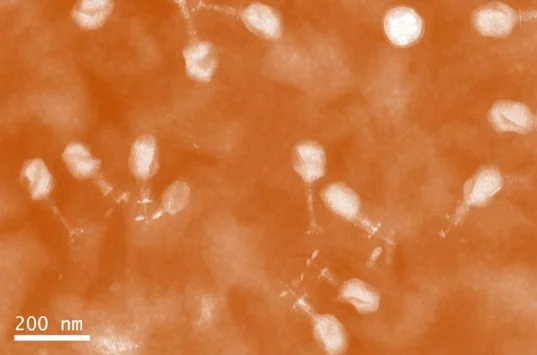
English translation updated . This article reflects the source material at its original publication date. Read the Chinese source.
Before setting off for the Shanghai Institute of Phage and AMR on the outskirts of the city, interns from elsewhere receive an unusual request: bring a bottle of wastewater from home.
A bottle of water from a sewer or drainage ditch contains millions of bacteria. But, much like sheep and wolves on a grassland, bacteria have a natural opponent: viruses called bacteriophages help prevent their unchecked multiplication. This ancient natural relationship has inspired scientists to use bacteria's own enemies against infections in the human body.
“Some virulent phages can complete a lytic cycle within half an hour of infecting a bacterium, producing more phages that continue to kill bacteria,” Professor Tongyu Zhu, director of the Shanghai Institute of Phage and AMR, told the medical news outlet Yixuejie.
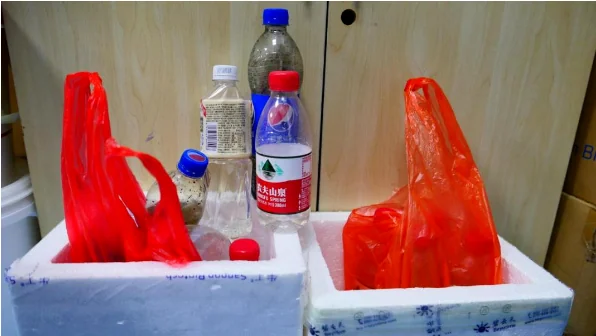
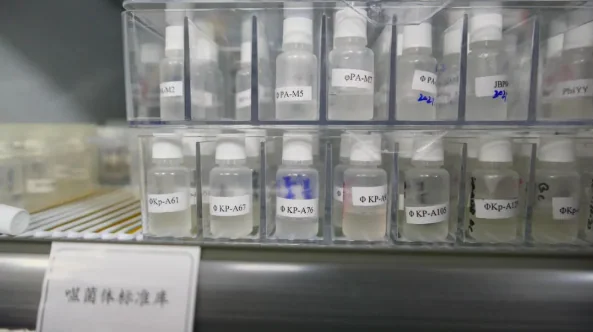
Wastewater bottles in the laboratory of the Shanghai Institute of Phage and AMR.
In 2016, following determined efforts by infectious-disease epidemiologist Steffanie Strathdee, the US Food and Drug Administration (FDA) authorized the use of this treatment, which the original report describes as not yet having undergone clinical trials. Her husband had developed organ failure after infection with a highly drug-resistant bacterium, but three weeks after authorization to administer phages, the account says, he had been given a new lease on life.
It was as if a starting gun had sounded again around the world. One of the best-known discoveries of modern microbiology, phage therapy had been largely forgotten for decades. Now it was returning to scientific attention, with the possibility that it might one day help humanity escape the crisis of bacterial drug resistance.
A powerful weapon against bacteria
“If you perform genomic analysis on the microorganisms in a person's gut, you will find many viral sequences. The vast majority are phages, which keep bacteria in check and help maintain human health,” said Dr. Nannan Wu, an associate researcher at the Shanghai Institute of Phage and AMR. Dr. Wu explained that phages inject their nucleic acids into bacteria, multiply in large numbers and ultimately cause the bacteria to burst and die.
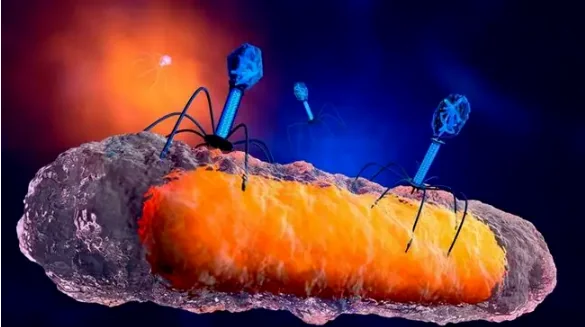
Illustration: phages “capture” a bacterium.
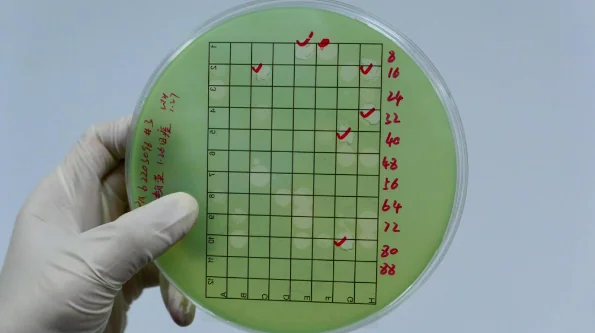
Using a culture plate divided into an 8 × 12 grid, Dr. Wu outlined the process of selecting phages:
“First, spread the bacteria you want to kill over the plate and allow them to grow. Then spot a different phage in each square. You can clearly see which phages have ‘eaten’ the bacteria and formed plaques. If there is also a ring around a plaque, it indicates that the phage in that square has stronger antibacterial activity.”
Six phages ultimately passed this selection step. Over the next dozen or so hours, the researchers would verify their titers again. Those meeting the required standard could then be combined into a cocktail for treating the patient.
Just as not all bacteria are harmful to people, only a tiny fraction of the estimated 10³¹ phages in nature have been identified and put to clinical use. “After several years of collection and screening, our library now contains more than 700 phages, covering over 90% of the drug-resistant bacteria commonly encountered in clinical practice,” Professor Zhu said at the time of the interview.
In January 2018, the Shanghai institute saw its first patient, a man infected with a “superbug.” In 2014, he had developed an infection throughout the urinary tract involving multidrug-resistant Klebsiella pneumoniae. He spent four years seeking care across China and receiving prolonged intravenous treatment in hospital. The antibiotics became increasingly potent and expensive, yet the bacteria persisted and became still more resistant.
After arriving in Shanghai, he received four courses of phage therapy, and the persistent infection was eventually cleared. Previously, even urination had caused him excruciating pain each day. Professor Zhu's team used phages able to kill the bacterium responsible.
The Shanghai Institute of Phage and AMR had formally opened only about half a year earlier, in August 2017. Professor Zhu was one of its founders. As a practicing kidney-transplant and urological surgeon, he had spent more than 20 years confronting bacterial infections. He had seen many patients survive technically successful operations only to die from postoperative drug-resistant infections, and he understood the clinical value that a new treatment might bring.
The other two founders were Professors Li-Kuang Chen and Xiaokui Guo. Professor Chen was a leading virology scholar at Taiwan's Tzu Chi Medical Center. Professor Guo, then executive deputy director of the National Center for Tropical Diseases Research at Shanghai Jiao Tong University, pointed to the first Chinese phage-treatment case in 1958, which the source attributes to the university's Shanghai Institute of Immunology. Almost 60 years later, he felt it was time to begin again.
The three quickly agreed. Over the four years described in the report, the Shanghai institute treated nearly 100 patients from across China. Most had superbug infections that had failed to respond to antibiotics, required long hospital stays, and in some cases threatened their lives. The report describes patients returning to normal life after receiving phage therapy.
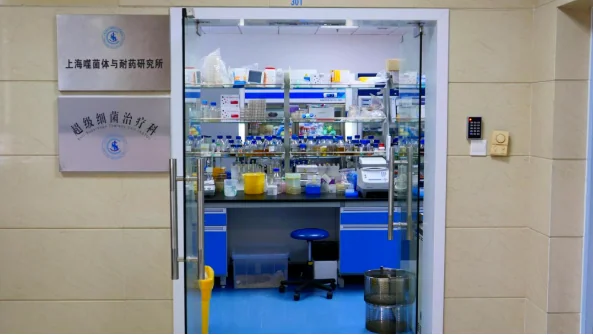
Shanghai Institute of Phage and AMR.
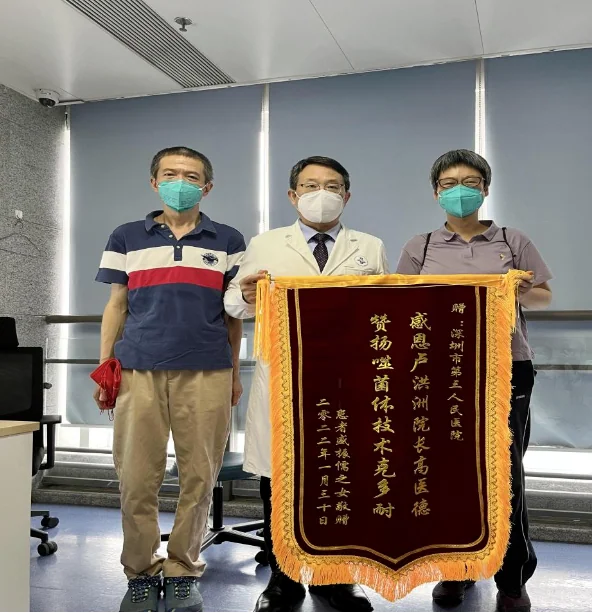
Some 1,200 kilometers away, Professor Hongzhou Lu, then president of Shenzhen Third People's Hospital and a member of the Shanghai institute's academic committee, also saw substantial promise in phage therapy. In January of the year discussed in the report, Shenzhen Third People's Hospital and the Shenzhen Institutes of Advanced Technology collaborated on the hospital's first phage-cocktail treatment. They treated an older patient with aspiration pneumonia and simultaneous infection by three superbugs.
“Combining multiple phages can broaden the antibacterial spectrum and reduce bacterial resistance to phages,” Professor Lu said. Phage cocktails were one of the field's main directions of development.
Once a favorite of the world's medical community
“Hospital intensive care units use all kinds of high-end antibiotics every day,” Professor Zhu said. “If we are to enter a new era of antibacterial treatment, phage therapy is right in front of us.”
But the potential of phages extends beyond treating people with bacterial infections. “A phage targets one particular bacterium or a specific group of bacteria,” Dr. Wu said. This specificity can be used to investigate whether different hospital patients carry related bacteria, helping monitor the possibility of healthcare-associated infection.
Because phages do not infect humans, they have also been formulated as sprays for disinfection in wards, particularly burn wards where patients have extensive infected wounds. Some aquaculture operators spray selected phages into fishponds to avoid adding antibiotics to feed and reduce opportunities for resistance to emerge. Other scientists are developing phage additives for food preservation.
These wide-ranging possibilities have attracted substantial interest from companies, institutions and health authorities. In 2019, the three largest overseas commercial licensing deals for phage-therapy research had a combined value exceeding US$2 billion. In 2020, BGI's research institute in Shenzhen also launched a global phage-library initiative.
Neither the Shanghai institute nor other organizations in China or abroad, however, were starting the development of phage therapy from nothing.
In 1896, the British bacteriologist Hankin observed a substance with antibacterial activity in India's River Ganges and associated it with the control of cholera epidemics. In 1917, the French microbiologist d'Herelle independently isolated a dysentery-bacillus phage from feces. Two years later, he pioneered phage therapy in humans by treating a child with dysentery.
The source dates China's first phage-treatment case to 1958. Qiu Caikang, a 30-year-old steelworker, had been scalded by molten steel at 1,800°C, suffering burns over almost 90% of his body. After surviving the initial shock, he developed Pseudomonas aeruginosa septicemia. Attempts to treat him with antibiotics, plasma antibodies and other measures had not produced satisfactory results, and his life remained in danger.
Professor He Yu, a pioneer of Chinese microbiology and then head of the Department of Microbiology at Shanghai Second Medical College, now Shanghai Jiao Tong University School of Medicine, thought of phages. In the early summer of that year, he organized more than 60 students to spend several days collecting material from cesspits and wastewater around the city's outskirts. They brought the samples back to the laboratory, isolated and cultured phages, and prepared a sufficient supply of phage solution. When it was finally applied to wounds across Qiu's body, his infection gradually came under control. The case also directly contributed to the beginnings of specialties such as burn medicine and plastic surgery in the People's Republic of China.

Phage therapy had, in fact, been a favorite of the international medical community in the early twentieth century. Pharmaceutical manufacturers produced large quantities of phage preparations for different diseases. In Europe and North America, people could readily buy phage-containing powders for skin infections at pharmacies. Scientists steadily advanced their understanding of the stages through which phages kill bacteria: adsorption, entry, replication, assembly and release.
The discovery of penicillin, however, led medicine down another path. After large-scale penicillin production began in the 1940s, phage therapy fell out of favor, although basic phage research continued. Between 1952 and 2011, six Nobel Prizes were associated with phages, according to the source. Those studies also directly advanced virology, molecular biology and synthetic biology.
A lifeline in the post-antibiotic era
Phage therapy was waiting for an opportunity to return, until it once again came into scientific view as a potential “rescuer.”
In 2015, Patterson, a 68-year-old American psychology professor, contracted Acinetobacter baumannii while traveling in Egypt. The bacterium, placed at the top of the World Health Organization's priority list of dangerous pathogens urgently requiring new antibiotics in the account, was resistant to almost all antibiotics.
This was precisely the situation the medical community most dreaded—and all the more so for Patterson's wife, Strathdee. “I began to realize that my husband's condition was much more serious than I had imagined. Modern medicine had exhausted its antibiotic options.”
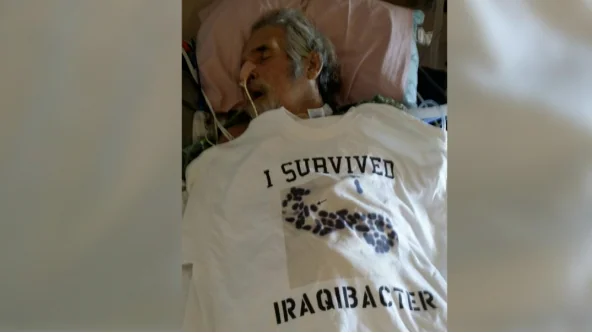
Patterson in a coma. Image source: CNN.
From the mid-to-late twentieth century through the period described in the report, antibiotics dominated the treatment of infectious diseases. Yet an unavoidable reality had emerged: antibiotic treatment was reaching its limits, and effectiveness was declining rapidly. Medicines once used to treat infections were increasingly failing.
The source cites a WHO report dated 2013, using carbapenem antibiotics for enterobacterial infections as an example: resistance had spread to every region of the world. Staphylococcal infections had once been readily treatable with penicillin, but penicillin was ineffective against methicillin-resistant Staphylococcus aureus (MRSA).
Antibacterial drugs introduced in the 1980s for urinary tract infections had also become ineffective in more than half of patients in many countries, according to the report. In 2014, approximately 3.3% of new tuberculosis cases were resistant to multiple drugs, as were 20% of recurrent cases. Data then recently published in The Lancet estimated that antibiotic-resistant bacterial infections had directly caused more than 1.2 million deaths worldwide in 2019.
The article attributes this situation to antibiotic overuse. Over the preceding decades, clinicians had often prescribed antibiotics whenever patients requested them, whether or not they were medically necessary. Antibiotics had also been used extensively and without adequate restraint in agriculture, fisheries and livestock production. A study published in Nature in 2015 reported a 30% rise in global antibiotic consumption between 2000 and 2010.
Natural selection was producing more and more superbugs, while developing an effective new antibiotic could take decades. Once a drug reached the market, worldwide overuse could once again undermine its effectiveness.
The source describes innovation in new antibiotics as having almost stalled since 1987 because of high development barriers, enormous investment requirements and a short window for profitability. Over the ten years discussed, seven companies in the United States alone that had successfully brought antibiotics to market had gone bankrupt or exited the business after poor commercial performance.
“Common infections will once again become fatal. If this trend continues, procedures such as organ transplantation and cancer chemotherapy will become increasingly difficult,” the article quotes Dr. Margaret Chan, then WHO Director-General, as saying at the United Nations General Assembly in 2016. “It could even mean the end of modern medicine.”
In the post-antibiotic era, modern medicine urgently needed another way to fight infection. For Strathdee, phages were the only remaining lifeline at that moment.
She persuaded phage scientists across the United States to search wastewater, marshes and ponds for natural enemies of A. baumannii. Under compassionate-use provisions, a phage cocktail was administered intravenously to Patterson in March 2016. The original report describes it as the first phage cocktail to receive FDA authorization for clinical use. Three days later, Patterson awoke from a deep coma.
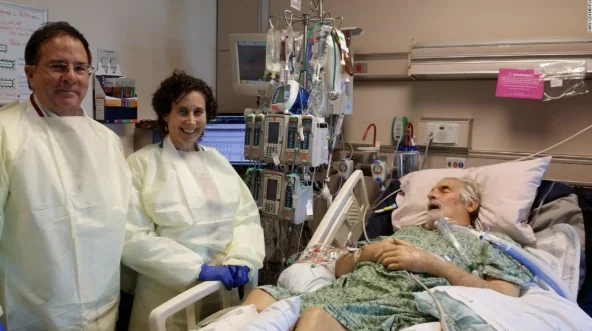
The treatment team administers the first round of phages to Patterson. Image source: CNN.
The case was published in Antimicrobial Agents and Chemotherapy in 2017 and helped inspire a new wave of interest in phage therapy. At the time of the report, more than a dozen phage-therapy development programs were advancing worldwide.
Phage therapy renewed
Early phage techniques left considerable room for improvement. When scientists returned to them, advances in related disciplines and engineering gave the approach new possibilities. Decades of limited clinical use did not mean that research had to begin again from the start.
“In the past, phages were generally swallowed or applied to wounds, and there were not even GMP manufacturing standards,” Professor Zhu said. “Today's purification techniques provide assurance of safety when phages enter the body, and multiple administration routes improve the precision and effectiveness of bacterial killing.”
In March 2020, the team led by Tongyu Zhu and Nannan Wu used phages to treat secondary drug-resistant A. baumannii infections in four critically ill patients with COVID-19. Their findings were published in Emerging Microbes & Infections.
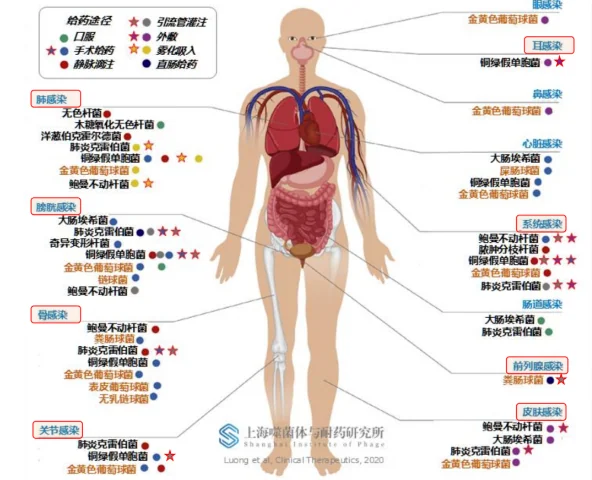
Some phage-encoded products, including lysins, also have considerable antibacterial potential. “This has evolved from simply using a virus against bacteria into a new concept of biological treatment,” Professor Zhu said.
As scientists tried to understand, edit and even synthesize more potent phages at the genetic level, developments in molecular biology and gene editing pointed the way forward.
The original article states that, in 2020, the US company Locus Biosciences announced the entry of LBP-EC01, a phage product incorporating CRISPR-Cas3 gene-editing technology, into phase II/III clinical research. It describes the product as permanently degrading Escherichia coli DNA and killing target bacteria that might escape phage attack. Historical detail requiring correction: the company's January 2020 announcement actually described the opening of a phase 1b trial; the phase II/III designation in the source is inconsistent with that announcement. Locus Biosciences announcement, 7 January 2020.
“Bacteria can use their own CRISPR systems to ‘cut up’ phages, making them resistant to phages. Strong host specificity also means that the antibacterial spectrum of a phage can be too narrow,” Professor Zhu said. A second generation of genetically engineered phages was being developed to address these problems.
CRISPR is only one of the weapons bacteria use against phages. Investigating other resistance mechanisms was also a major research direction at the Shanghai institute.
In 2016, Dr. Nannan Wu, who trained in virology, returned from the École normale supérieure de Lyon in France and joined Professor Zhu's team to help establish the institute. Building it from the ground up into a professional team of more than 20 people required researchers able to work across cell biology, molecular biology, infectious diseases and virology.
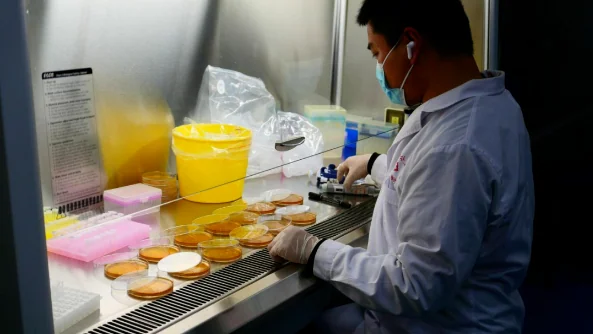
Researchers at work at the Shanghai Institute of Phage and AMR.
As the team sought to bring phage therapy into wider clinical use, Professor Zhu felt that it also had to confront treatment habits established during the antibiotic era.
Although phage therapy offered an important direction for reducing reliance on antibiotics, awareness of it among clinicians was still limited, as with many new technologies. Over the four years described in the article, the institute's researchers had worked to familiarize more clinicians with the approach. Within the institute, some well-developed phage combinations were also prepared as standardized “medicines” to reduce the time and cost associated with personalized treatment.
Phage therapy: a door reopened
“You cannot simply select phages and hand them to clinicians for use. They need to be identified and genome-sequenced, endotoxins must be removed, and a complete preparation and manufacturing process in a GMP facility is required,” Professor Zhu emphasized. “It is a whole system.”
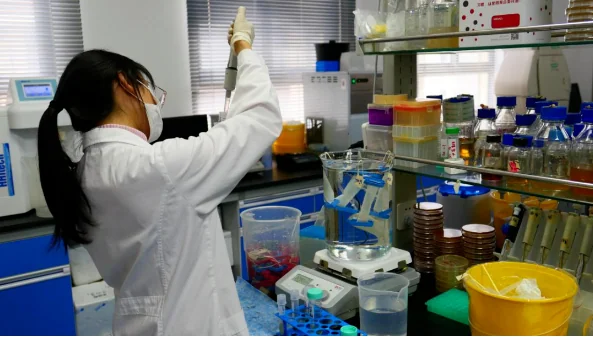
Researchers at work at the Shanghai Institute of Phage and AMR.
Because phages are biological entities, manufacturing phage-treatment products differs greatly from manufacturing chemical drugs or protein medicines, and the same standards cannot simply be applied in full. The source describes the situation at the time as one in which phage therapy was authorized only for clinical trials and no formally implemented treatment or preparation-quality standards existed in China or abroad.
The original article further states that, because of the historical safety record of phage medicines, the FDA did not require corresponding pharmacokinetic and toxicology study data in applications for human clinical trials. It also describes the European Medicines Agency (EMA) as considering existing drug-regulatory pathways unsuitable for phage therapy and calling for dedicated rules. These are the regulatory positions reported in the historical source.
Comparable to compassionate use in the United States, phage treatment in China was being conducted through case series approved by ethics committees, according to the article. Several immediate questions needed to be resolved before forthcoming drug or treatment trials.
“For respiratory infections, for example, we need to know the bioavailability and effectiveness associated with different administration routes, as well as the adverse events that each might cause,” Dr. Wu said. Clinical trials were costly. “Before entering that stage, we need to accumulate more detailed data.”
“Different phages have different adsorption rates and latent periods, so how do we determine the optimal dose and timing of treatment?” Professor Lu asked. Later industrial-scale production would also pose significant challenges, including which technology could purify phages in large batches while meeting safety standards.
Whatever the challenges, the door to phage therapy had reopened.
On 3 May in the year discussed by the original report, Nature Communications published what the article called the first successful cure of M. chelonae infection using phages. It then described a Cell report ten days later as the first cure of a refractory mycobacterial lung infection using genetically engineered phages, in a patient who had endured six years of illness. These descriptions concern individual treatment cases. On 4 August, another Cell paper reported that orally administered phages targeting K. pneumoniae could alleviate inflammatory bowel disease. The scope of that last finding is important: the study demonstrated suppression of intestinal inflammation in animal models; its human component evaluated phages in healthy volunteers, rather than establishing efficacy in patients with inflammatory bowel disease. Original Cell study, 4 August 2022.
Scientists had also recently discovered a previously unseen giant phage with an unusual “compartment” that protected its core genetic material from bacterial counterattacks. The related research appeared in Nature on 3 August.
It may take people decades, or even a century, to understand the nearly four-billion-year evolutionary struggle between phages and bacteria. In the immediate world of modern medicine, however, Professor Zhu remained hopeful about phage applications. “We need more research on structural and biological engineering of phages, an industry supported by standards, and benefits for more patients,” he said. “That is our work.”
References
[2] How can we stop antibiotic resistance? (Chinese-language source).
[3] The past, present and future of phage therapy (Chinese-language source).
[4] Phage medicines: industry research and investment recommendations—deals worth more than RMB 3 billion; can phages rescue humanity from drug-resistant bacteria? (Chinese-language source).
[5] Doused with 10 tonnes of molten steel and burned over 90% of his body: how did Ruijin Hospital save a man thought certain to die? (Chinese-language source).