English translation updated . This article reflects the source material at its original publication date. Read the Chinese source.
1. Potential applications of phages
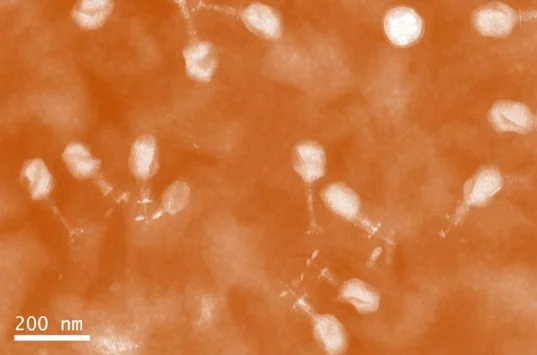
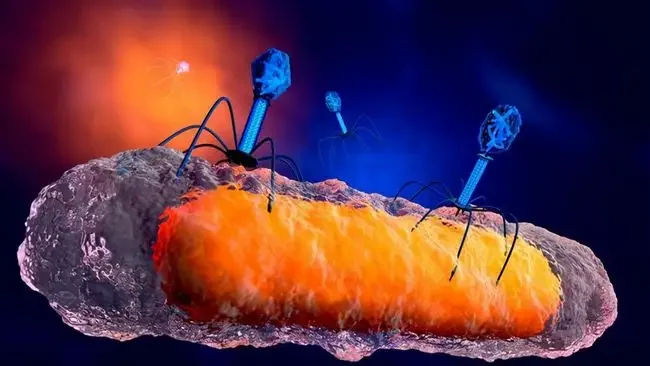
Phages are viruses that infect bacteria and are abundant in natural environments. Their ability to target particular bacteria led to early interest in treating bacterial infections in humans and animals. That interest declined as antibiotics became established, then increased again with antimicrobial resistance.
Research also considers phages for environmental bacterial control. Extensive chemical use can create environmental burdens and select for reduced susceptibility. Phage approaches have therefore been investigated in farming, food production, agriculture, aquaculture and wastewater treatment. Antibiotic resistance does not necessarily prevent a bacterium from being susceptible to a suitable phage.
These properties have prompted studies of targeted phage-based surface decontamination in hospitals, particularly against persistent contamination by resistant bacteria.
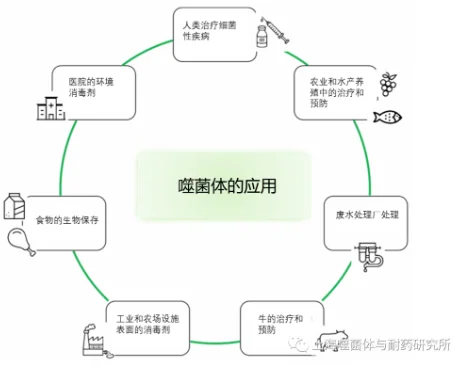
Figure 1. Potential phage applications, from reference 1.
2. Limitations of chemical disinfection
Contaminated environmental surfaces can contribute to healthcare-associated infections. Hospital surfaces may harbour organisms such as Pseudomonas aeruginosa, Staphylococcus aureus, including MRSA, and Escherichia coli, which can be transferred through contact.
Conventional disinfectants remain important infection-prevention tools, but their limitations include environmental impacts and selection pressures. The source also discusses the hypothesis that indiscriminate removal of environmental microorganisms could remove potentially protective competitors. This does not establish that phages can replace standard hospital cleaning or disinfection protocols.
3. Research on environmental decontamination
Laboratory studies have investigated phage cocktails against contamination by multidrug-resistant Acinetobacter baumannii, Salmonella and E. coli [1].
In 2016, Li-Kuang Chen’s team in Taiwan investigated phage-containing aerosols against carbapenem-resistant A. baumannii (CRAB) in an intensive care unit. The intervention was used alongside routine chemical disinfection. The study reported fewer CRAB-associated healthcare infections, suggesting that targeted environmental treatment could reduce transmission in that setting [2].
Targeted interventions may be particularly relevant during outbreaks or when infected patients present a transmission risk. Nevertheless, systematic descriptions of how to integrate phages into infection-prevention workflows remain limited. Nannan Wu and Tongyu Zhu reviewed potential roles for therapeutic phages in healthcare-associated infection management and their integration into clinical practice [3].
4. Experience described in Shanghai
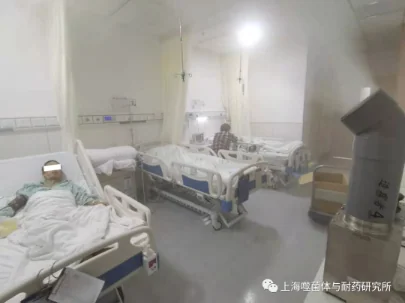
Figure 2. Phage aerosol application in a ward at Shanghai Public Health Clinical Center.
The archived article reports that Shanghai Public Health Clinical Center introduced phage environmental spraying after beginning clinical phage studies in 2017. Researchers matched lytic phages to patient-derived bacterial isolates, and trained technical staff applied the preparations to ward environments.
The organisms discussed include resistant K. pneumoniae, A. baumannii and P. aeruginosa. The source describes environmental application as an adjunct to phage treatment and reports favourable experience, but supplies no numerical outcome data for this local example. The account therefore documents historical practice rather than demonstrating a general clinical benefit.
Hospitals need both effective patient care and safer environments. Phage-based approaches offer a research direction for environmental infection prevention, with implementation dependent on appropriate evidence and institutional procedures.
References
- D’Accolti M, et al. Bacteriophages as a Potential 360-Degree Pathogen Control Strategy. Microorganisms. 2021;9(2).
- Ho YH, et al. Application of Bacteriophage-containing Aerosol against Nosocomial Transmission of Carbapenem-Resistant Acinetobacter baumannii in an Intensive Care Unit. PLOS ONE. 2016;11(12):e0168380. doi:10.1371/journal.pone.0168380.
- Wu N, Zhu T. Potential of Therapeutic Bacteriophages in Nosocomial Infection Management. Frontiers in Microbiology. 28 January 2021. doi:10.3389/fmicb.2021.638094.