English translation updated . This article reflects the source material at its original publication date. Read the Chinese source.
Originally published on 21 February 2023. The research described below reflects the studies discussed in that article.
Introduction
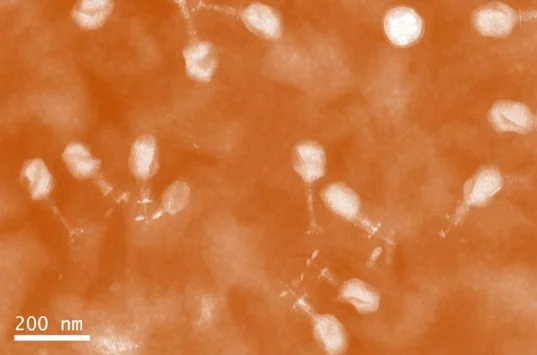
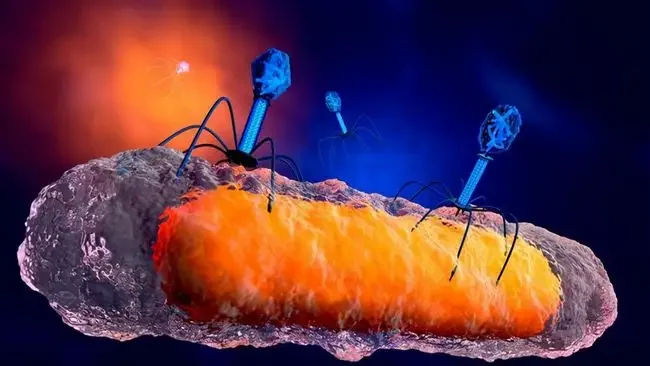
The human body is like a mobile culture medium, hosting a vast number of microorganisms. These include commensal bacteria, which make up a major part of the human microbiota, and bacterial viruses, usually called bacteriophages or phages. These microbial communities do not exist in isolation inside the body: they interact with their host and participate in mutually beneficial relationships, forming distinctive, stable internal ecosystems. A growing body of research indicates that these resident microorganisms closely influence human health. This article explores how phages may affect health and the treatment of disease by regulating gut bacteria, how phages influence immunity, and how the immune system in turn influences the phage–bacterium ecosystem.
1. The first arrivals: where do infant gut phages come from?
The gut microbiota plays an indispensable role in maintaining health. Its principal functions include helping the body digest food and absorb nutrients, and it is also closely involved in metabolism, disease development and maturation of the immune system. Earlier research focused primarily on gut bacteria. More recent studies have identified phages as an important component of the gut microbiota whose replication and distribution are closely associated with the host's physiological state.
Studies found almost no phages, or only very small numbers of phage particles, in infant meconium. By one month after birth, however, phage abundance had risen sharply to 10⁹ particles per gram of faeces. Where did these phages come from? To investigate, researchers collected 648 faecal samples from one-year-old children and isolated 900 strains of Escherichia coli. More than 60% of the strains could spontaneously release temperate phages*. By comparison, the source reports that fewer than one quarter of the faecal samples contained virulent phages. These findings suggest that the earliest infant gut phages originate from temperate-phage-carrying bacteria that colonize the gut early in life. See translation note 1 for a distinction in the underlying study's sampling result.
*Temperate phages: Phages that can either integrate into a bacterial genome during a lysogenic cycle or lyse bacteria and release progeny virus particles during a lytic cycle. An integrated phage genome that replicates with the bacterium without producing progeny particles is called a prophage. *Virulent phages: Phages that undergo only the lytic cycle.
2. A community that develops with age: what characterizes adult gut phages?
In 2014, biologists discovered a new group of phages in the human gut and named it crAssphage. This large, widespread phage group occurs in more than 50% of people and has a global distribution. crAssphages mainly infect Bacteroides, a group of commensal gut bacteria, and in some individuals can account for more than 90% of the gut virome. A metagenomic study of the microbiomes and viromes of 10 healthy adults over one year reported gut viral loads of 10⁸–10¹⁰ particles per gram of faeces, representing more than 39,000 viral types. The adult gut virome consisted primarily of crAss-like phages, Microviridae phages and a smaller number of highly specific viruses. The source also describes increasing phage diversity and abundance with age, with crAss-like phages becoming overwhelmingly predominant in later life.
3. Is phage treatment feasible for intestinal disease?
The potential of phages to treat a range of human diseases has attracted widespread interest. Crohn's disease is a chronic inflammatory bowel disease that can cause recurrent inflammation of the intestinal mucosa. Although its precise cause remains unclear, studies have identified adherent-invasive E. coli (AIEC) as a predominant pathogen on the ileal mucosa of affected patients. In an animal-model study, oral administration of three targeted virulent phages to mice with intestinal AIEC infection significantly reduced AIEC counts in both the faeces and the intestine. The source reports that a single dose of the phage cocktail reduced colitis within two weeks and prevented worsening of ulcerative-colitis-like symptoms in this experimental setting.
4. Could phages also help treat alcohol-associated hepatitis?
Targeted removal of pathogenic gut bacteria by phages has been investigated for diseases both within and outside the intestine. Researchers found a positive association between alcohol-associated hepatitis and intestinal colonization by a strain of Enterococcus faecalis. This strain produces a cytolysin complex. The source describes cytolysin produced in the gut reaching the liver, causing liver injury, hepatocyte death and declining liver function, ultimately increasing mortality. In a mouse model infected with E. faecalis, oral administration of targeted virulent phages significantly reduced intestinal colonization and cytolysin production. In that model, the intervention was reported to eliminate alcohol-induced liver injury, steatosis and inflammation (Figure 1). These findings illustrate how phage regulation of gut bacteria can have effects throughout a mammalian host.
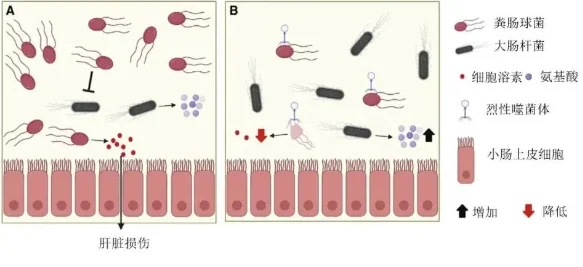
Figure 1. Gut phages can both prey directly on target bacteria and affect non-target bacteria.
5. How does phage predation affect the gut ecosystem?
A study discussed in the source found that phage predation not only reduced the relative abundance of target gut bacteria but also changed non-target bacteria through interactions among bacterial species. Some populations increased while others decreased. These phage-mediated cascades within the microbiota further altered its metabolic activity, including reduced production of the neurotransmitter metabolites tryptamine and tyramine and increased production of certain amino acids, such as serine and threonine (Figure 1). The metabolite names in this translation follow the underlying study; see translation note 2.
6. How do phages affect the immune system?
Phages do not infect eukaryotic cells in the way they infect bacterial hosts, but increasing evidence indicates that they can modulate mammalian immune responses. In particular, when phages and their bacterial hosts have a symbiotic relationship, bacteria can use prophages to alter mammalian innate immunity and promote their own survival. Research discussed in the source found that infections with Pseudomonas aeruginosa strains carrying the Pf prophage were more likely to produce chronic wounds that were difficult to heal. Further work found that, after leukocytes internalized Pf phages, phage RNA activated an antiviral response mediated by Toll-like receptor 3 (TLR3) and type I interferon, suppressing production of tumour necrosis factor alpha (TNF-α) in the wound environment (Figure 2A). This weakened leukocyte phagocytosis, made it harder to clear P. aeruginosa from the wound and promoted persistent, chronic infection. The interferon term has been corrected against the primary study; see translation note 3.
Another study found that a phage encoding an ankyrin protein could induce E. coli to secrete the ANK protein. This reduced TNF-α levels in macrophages and consequently reduced their phagocytosis of E. coli. The source also discusses inflammatory responses associated with high phage exposure during experimental treatment. In a mouse model of AIEC-associated colon cancer, repeated oral administration of a phage cocktail reduced the intestinal AIEC load and downregulated genes associated with tumour growth and metastasis, preventing AIEC-induced colon cancer in that model. However, the article also reports that excessive phage exposure and the resulting accumulation of phage DNA in the gut could activate IFN-γ through a TLR9-associated pathway and aggravate colitis (Figure 2B).
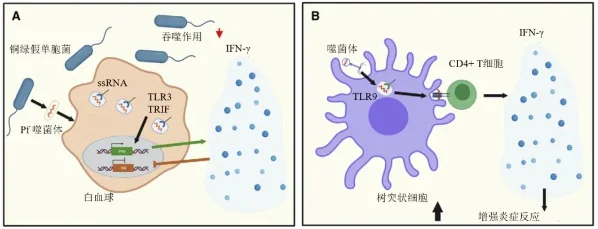
Figure 2. Mammalian immune responses directly induced by phages.
7. How does the immune system affect bacterial and phage communities?
Phages and their bacterial hosts influence immunity, and the host immune response in turn affects both bacteria and phages. Salmonella Typhimurium genomes commonly contain prophages. Some carry virulence genes that enhance bacterial invasion of intestinal epithelial cells and worsen intestinal inflammation. Researchers infected mice with equal proportions of Salmonella carrying or lacking the prophage named “SpoEø” in the source. After coinfection, the population of lysogens carrying SpoEø increased steadily. Further investigation indicated that by-products of intestinal inflammation caused by Salmonella Typhimurium triggered a bacterial stress response, increasing the amount of SpoEø phage and the extent of lysogenic conversion in the gut.
The researchers therefore developed an oral vaccine. In vaccinated mice, an IgA-mediated immune response prevented Salmonella invasion and lysogenic conversion by SpoEø, reducing disease development and progression. As noted above, Pf-carrying P. aeruginosa was associated with chronic, poorly healing wounds. Scientists immunized mice with the major capsid protein of Pf phage to stimulate a humoral immune response, and the incidence of P. aeruginosa wound infection fell by half. They subsequently isolated monoclonal antibodies against the Pf major capsid protein and used them to treat mice, also obtaining a significant improvement in symptoms. These experimental findings suggest that identifying the phage factors that contribute to bacterial disease, and developing immune strategies directed at their antigenic epitopes, could offer a route to disease prevention.
Another study discussed in the source found that the gut commensal Enterococcus hirae carries a prophage encoding a TMP protein. A major epitope of TMP closely resembles a tumour peptide epitope from PSMB4. Infection of mice with the bacterium consequently increased the antitumour response of CD8+ T cells. Both stimulation of dendritic cells with the phage TMP epitope and expression of that epitope on the surface of E. coli limited tumour growth and improved the effects of immunotherapy in the experiments. Further research showed that the phage could also integrate into another gut commensal, Enterococcus gallinarum, suggesting that it could spread within the intestinal community. Given the diversity of the gut microbiota, other similar mechanisms may also influence human health.
Outlook
Research into the three-way interactions among phages, bacteria and their hosts has deepened our understanding of how components of the body's microbial ecosystems influence one another. Looking ahead from the time of this article, combining deep sequencing of patient microbiota with laboratory studies of gut phage biology was seen as an important way to improve that understanding. Phage therapy had moved rapidly from a once-marginal field toward the front line of research on antibiotic-resistant infections. Its study needs to consider not only direct antibacterial effects but also the wider consequences of phage predation for the microbiome, metabolome and immune system. Explaining the three-way interactions among phages, bacteria and mammalian immunity will also require multidisciplinary research. The article closes by describing this as one of the most exciting periods in the more than 100-year history of phage biology.
Translation notes
- The source describes fewer than one quarter of infant faecal samples as containing virulent phages. The underlying study instead reports that 24% of viromes contained phages targeting E. coli, without limiting that percentage to virulent phages. The source's statement is retained above with attribution. Mathieu et al., Nature Communications, 2020.
- The source's Chinese metabolite names correspond to tryptophan and tyrosine, although it calls them neurotransmitters. The primary study reports the related metabolites tryptamine and tyramine, which are used in the translation. Hsu et al., Cell Host & Microbe, 2019.
- For the Pf–TLR3 pathway, the source gives IFN-γ. The primary study reports type I interferon, so that term is used above. The separate TLR9–IFN-γ description is retained. Sweere et al., Science, 2019.
- “SpoEø” is the Salmonella phage spelling printed in the archived source and is retained here. The source supplies no reference list for this article. The superscripts in 10⁹ and 10⁸–10¹⁰ were restored from its archived HTML.