English translation updated . This article reflects the source material at its original publication date. Read the Chinese source.
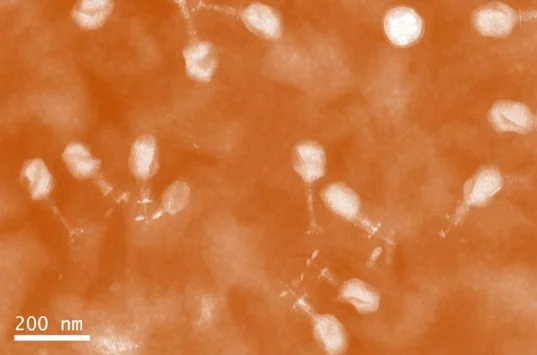
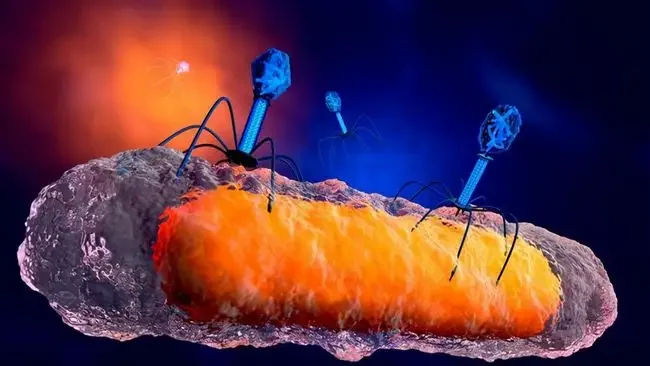
On 10 September 1917, 44-year-old Félix d’Herelle published a short paper in the prestigious Comptes Rendus de l’Académie des Sciences. It described a new microorganism—an obligate intracellular parasite of bacteria—which he subsequently named the bacteriophage. The discovery brought international attention to a self-taught microbiologist who had left school early, while placing him at the center of disputes over the nature of phages.
D’Herelle was a forceful personality whose scientific travels took him across Europe, the Americas and Asia. Without a systematic medical education, he remained an outsider to the scientific establishment. Although he received honorary doctorates and professorial appointments, he often clashed with prominent contemporaries. His contributions to phage discovery, applications and molecular biology brought multiple Nobel Prize nominations, but he never received the prize or the recognition from mainstream science that he sought. He died of pancreatic cancer in Paris in 1949.
Félix d’Herelle was born on 25 April 1873, and his family background remains unusual. In his memoir, The Wanderings of a Microbiologist, he suggested that his father had been born in Canada. His father may have belonged to the circle of the Quebec political leader Sir Henri and also had connections to the French aristocracy. His mother was the daughter of a Dutch property manager and was 30 years younger than his father; the account suggests that she may not have been his first wife. His father died when Félix was six. D’Herelle gave Montreal, Quebec, as his birthplace in his memoir, passport and wartime identity documents. Alain Dublancet, however, found a Paris birth certificate under his mother’s surname.
His mother appears to have been relatively wealthy. In the summer when he was 16, she gave him 1,000 francs—approximately a year’s wages for a French casual laborer at the time—to travel by bicycle through rural France and Belgium. After he completed secondary school at 17, she gave him a further 3,000 francs to travel to South America. D’Herelle received no further systematic education.
While traveling in Turkey, he met Marie Caire. In July 1893, the 20-year-old d’Herelle married the 15-year-old Marie in Istanbul while she was pregnant. He subsequently joined the French army, but after only one year of a four-year term, he had become tired of military life. His service record indicates that he deserted in November 1894.
In 1897, aged 24, he returned to Canada and decided to establish a laboratory in Quebec to pursue independent research. The Quebec leader Sir Henri gave him an opportunity to work as a microbiologist. With maple syrup then in oversupply, the Quebec government commissioned him to investigate whether it could be fermented into a form of whisky for sale in the United States.
In 1899, d’Herelle and his brother purchased land in Longueuil, near Montreal, and established the Herelle chocolate factory. The venture failed the following year. Facing financial difficulties and the birth of a second daughter, he searched for work and eventually accepted a Guatemalan government contract as a bacteriologist at a hospital in Guatemala City. There he studied localized fungal infections of coffee plants and also explored making alcohol from bananas.
To continue his fermentation work, d’Herelle moved to Mexico. By 1909, at the age of 36, he had developed a method of producing spirits from sisal, a native plant cultivated for its fibers. His interest in sisal fermentation also created an opportunity to study insect disease. He identified a bacterial insect pathogen that might help control locusts. The Mexican government subsequently sent him to the Institut Pasteur in Paris for further microbiological study.
In 1911, d’Herelle moved his family to Paris and worked as an unpaid assistant in a laboratory at the Institut Pasteur. While studying a bacterium that caused enteritis in certain insects, he occasionally observed clear spots on culture plates. These observations encouraged him to extend his ideas about animal epidemics to parasites of bacteria and laid the groundwork for his discovery of phages.
In 1917, during the First World War, a French cavalry squadron was suffering from dysentery. While investigating the dysentery bacillus, d’Herelle again observed clear plaques. When he mixed filtrate from a plaque with a bacterial culture, the bacteria were rapidly eliminated. He published the finding in the Comptes Rendus de l’Académie des Sciences. The bacterial parasite described in that paper was what he himself would call the bacteriophage.