English translation updated . This article reflects the source material at its original publication date. Read the Chinese source.
Historical information: this article describes the clinical research program and eligibility criteria at the time of the original publication. It is not a current recruitment notice. Phage therapy applications are temporarily closed.
1. What is phage therapy?
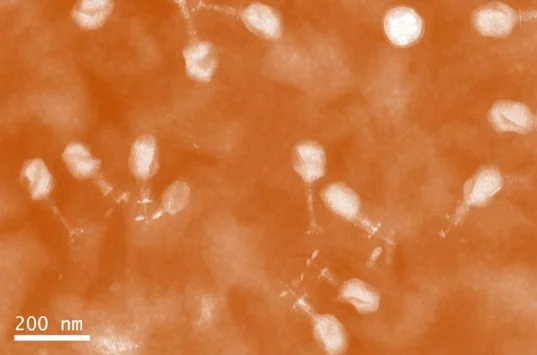
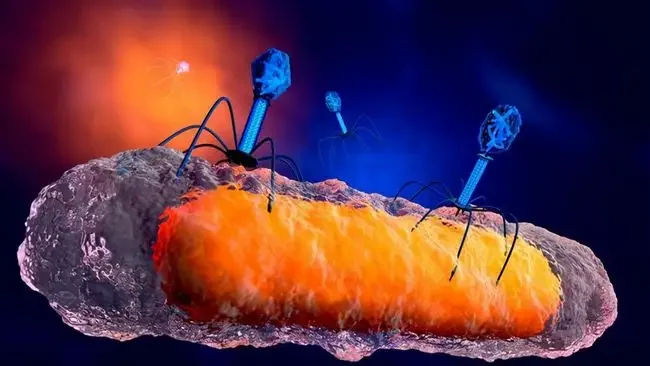
Phage therapy uses bacteriophages to treat diseases caused by bacterial infections. Phages are viruses of bacteria. After infection, some integrate into a bacterial host and persist with it; others multiply within the host, lyse the bacterial cell and release progeny that can infect further bacteria. Lytic phages are the type investigated for treatment of bacterial disease.
Phage therapy attracted considerable attention before antibiotics were discovered. Its use declined as broad-spectrum antibiotics became widely available. Growing antibiotic resistance has since renewed interest in this approach.
2. Which bacterial infections may be considered?
Bacterial infections vary greatly in severity. Some resolve with the patient's immune response, while others require antibiotics selected by a clinician. Severe acute infections and persistent chronic infections can be harder to manage, especially when the pathogen is resistant to multiple antibiotics.
The original article discusses antibiotics such as carbapenems, third- and fourth-generation cephalosporins, methicillin, vancomycin, tigecycline and polymyxins in this context. These are examples retained from the source, rather than a treatment hierarchy or a list of interchangeable medicines. Antibiotic selection depends on the organism and clinical situation.
When conventional treatment fails or suitable antibiotics are unavailable, phage therapy may be considered within an appropriate research or clinical framework. The program described in this article focused on difficult chronic infections and infections involving highly resistant bacteria.
3. Can phage therapy replace antibiotics?
At the time described, phage therapy was being investigated as a complement to antibiotics or as an alternative where no active antibiotic was available. It was not ready to replace antibiotic treatment generally.
Phages are abundant in nature. Their potential advantages include specific bacterial killing, replication in susceptible hosts and the possibility of limiting effects on non-target microbiota. These properties have made them a subject of precision antimicrobial research.
Specificity is also a limitation. The original article describes a tendency for strongly lytic phages to have narrower host ranges, while broader-host-range phages may show less activity against particular strains. A single naturally occurring phage therefore does not necessarily provide both broad coverage and strong killing. Cocktails or combinations with antibiotics are approaches used to address this problem.
The source states that larger controlled trials available at the time had not demonstrated clear superiority over antibiotic controls, whereas individual reports using phages screened in vitro against the patient's own isolate more often described success. Broadly active cocktails still required further development.
Screening is another challenge. Not every phage is lytic, and activity varies among bacterial strains. The source reported that lytic phages had not been identified for some organisms, including Helicobacter pylori, at the time of writing. Slow growth, as in some mycobacteria; demanding culture conditions, as in anaerobes; and biosafety requirements, as for Yersinia pestis, can make isolation difficult. Phage banks therefore cover only a limited range of organisms and strains.
Labor, materials and treatment coordination also constrain delivery. The source reports that the Shanghai Institute of Phage and Antimicrobial Resistance treated 41 patients between January 2018 and the end of March 2021. It cites Adaptive Phage Therapeutics' case studies as reporting provision of therapeutic phages for 40 patients by March 12, 2021. These are historical figures. They illustrate why access at that stage could not match the scale of antibiotic treatment.
4. What was required to join the clinical trial?
Treatment in the program required a hospital with ethics approval for the relevant trial. Beginning in 2018, the Institute conducted phage therapy research at the Shanghai Public Health Clinical Center and Zhongshan Hospital, Fudan University.
Participation required at least three things: meeting the trial's eligibility criteria, identifying an effective lytic phage against the patient's pathogen, and being admitted or transferred to one of the participating hospitals.
5. What were the eligibility criteria?
Clinical coordinators and outpatient physicians assessed patients against the trial protocol. The following criteria are reproduced as historical information.
Inclusion criteria
- Age 10–90 years, with a multidrug-resistant bacterial infection documented by susceptibility testing.
- The pathogen met at least one of these conditions: resistance to all tested antibiotics; resistance to key antibiotics, with reference to the WHO's 2017 list of 12 priority pathogen groups; susceptibility in vitro to a key antibiotic but inadequate clinical response, defined in the source as at least three recurrent infections with the same organism or at least two months of continuous antibiotic use without being able to stop; or susceptibility to a key antibiotic whose use was restricted by organ toxicity or allergy.
- At least one phage capable of lysing the target resistant organism could be identified.
- Delivery was possible by spraying or applying a preparation to the infection site, inhalation, instillation, local injection or a drainage catheter.
- The participant and family had read, understood and signed the informed-consent documentation.
Exclusion criteria
- The bacterial infection could be effectively controlled with antibiotics.
- Intravenous administration was the only possible delivery route.
- The investigator considered participation inappropriate.
Enrollment required meeting the inclusion criteria without meeting an exclusion criterion.
6. Why were some infections ineligible?
The program focused on resistant bacterial infections that had not responded to antibiotics, principally respiratory, urinary, abscess, wound and bone infections. The phage bank mainly targeted Acinetobacter baumannii, Klebsiella pneumoniae, Pseudomonas aeruginosa, Staphylococcus aureus, Enterococcus faecium, Enterococcus faecalis and Stenotrophomonas maltophilia.
The following categories were outside the program described:
- Fungal, viral or protozoal infections, because phages target bacteria.
- Bloodstream infections, or infections for which intravenous administration was the only feasible route, such as an undrained intracranial infection. Intravenous phage administration was not included in this particular protocol.
- Infections involving anaerobes, Mycobacterium tuberculosis, H. pylori, mycoplasmas, chlamydiae or certain rare organisms, given the phage bank's coverage and the difficulty of isolating new phages at that stage.
7. Could a patient enroll if no pathogen could be cultured?
The protocol required a live bacterial isolate for phage screening. Standard clinical bacterial culture, identification and antibiotic susceptibility testing were necessary for eligibility assessment and matching phages to the organism. Without a cultured pathogen, screening and enrollment could not proceed.
8. Was metagenomic sequencing enough if culture was negative?
No. Sequencing can detect bacterial genetic material and resistance-associated genes, but it does not supply the live organism needed for phage screening. In the program described, it could support assessment of the pathogen but could not replace culture.
9. What if bacteria grew but the clinician did not consider them the cause?
The treating team interpreted culture results together with the infection history, temperature, blood and urine findings, inflammatory markers and imaging. A positive culture alone did not necessarily establish that the organism was causing the illness.
Normal flora can enter a specimen—for example, oral bacteria in sputum—and environmental contamination can occur during sampling. Repeat assessment might therefore be needed. If the same organism with a similar susceptibility pattern could not be recovered again, and other findings did not support bacterial infection, the isolate might not be considered the pathogen. Such a result would not qualify a patient for phage treatment under the protocol.
10. What if the organism was antibiotic-susceptible but treatment had failed?
The source describes three circumstances in which an antibiotic-susceptible infection could still be considered: at least three recurrent infections with the same organism, supported by culture and susceptibility reports; at least two months of continuous antibiotic treatment without being able to stop, supported by cultures and clinical records; or a restriction on antibiotic use because of organ toxicity or allergy, supported by medical documentation.
11. Could treatment take place at another hospital?
The historical trial was conducted at the Shanghai Public Health Clinical Center and Zhongshan Hospital, Fudan University. Its ethics approval did not authorize delivery at other hospitals.
The process described involved communication between the patient's treating physician and the research team, preliminary eligibility assessment and, if a bed was available, transfer to a participating hospital for cultures, screening and treatment. The source also mentioned reports of separate phage trials at Shenzhen People's Hospital and overseas. These historical references do not establish current recruitment or availability at any institution.
12. Why might treatment not proceed after admission?
Culturing the pathogen and finding a suitable phage were essential. Treatment could not continue if:
- Repeated cultures after admission did not recover the pathogen and the earlier isolate from another hospital could not be obtained.
- The pathogen was cultured but no active lytic phage was found in the bank or through new isolation attempts.
- A lytic phage was found but repeated production attempts did not reach the titer required by the protocol. A preparation below specification could not be used; the source notes that rapid immune clearance might limit activity at insufficient titers.
13. What did the workflow and waiting times look like?
Figure 1 shows the historical workflow. Timing varied with bacterial growth and other factors. The source gives these approximate intervals:
- Bacterial culture and identification: one to two working days, with a further two to three working days if additional susceptibility testing was required.
- Eligibility review and screening against the cultured isolate: approximately one to two days for phage screening after the isolate was obtained from the laboratory.
- If a matching GMP phage preparation was already in stock: one to two days for testing against the patient's isolate, including titer assessment, before treatment according to the plan agreed by the clinical and phage teams.
- If a matching GMP preparation was unavailable or failed quality control: approximately three to seven days for preparation and GMP packaging.
- If no suitable banked phage was found: approximately two to seven days for a new isolation attempt. Failure to identify an active phage after two rounds met an exclusion condition described in the source.
The program also used phage sprays for environmental decontamination of patient rooms. After each treatment round, symptoms and target-organism cultures informed whether the participant could complete the trial, needed another round or required a new eligibility assessment.
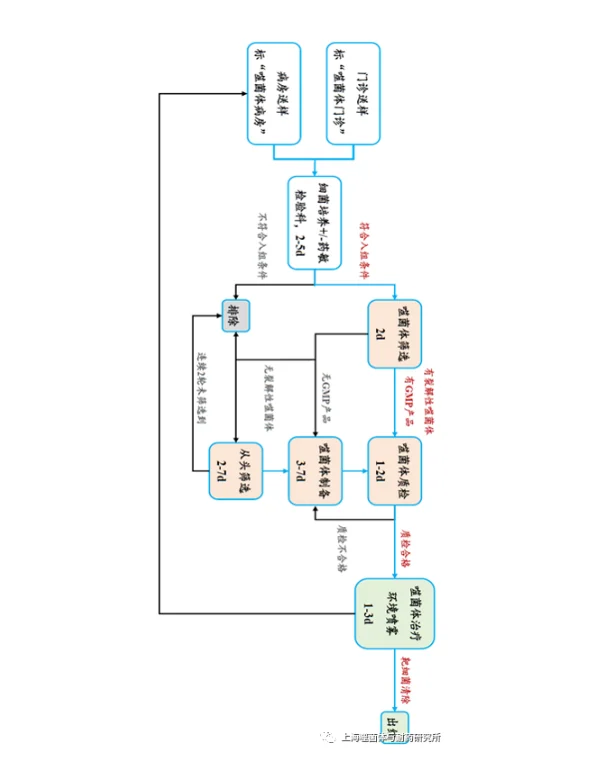
Figure 1. Phage therapy clinical trial workflow at the Shanghai Institute of Phage and Antimicrobial Resistance, as shown in the original article.
14. Was treatment considered safe?
The article describes more than a century of phage therapy experience and reports generally supportive safety observations, while acknowledging known and unknown risks.
Although phages infect bacteria rather than human cells, the immune system can recognize them as antigens. Preparations can also contain residual bacterial material generated during propagation, including endotoxin and cellular debris, which may be pyrogenic or immunogenic. Fever or a strong inflammatory response can be particularly consequential in seriously ill patients.
The source therefore emphasizes purification, preparation quality and strict eligibility assessment. Achieving suitable quality standards also creates production-capacity and cost challenges during clinical research.
15. Why were the eligibility criteria not broader?
Inclusion and exclusion criteria are central to a clinical trial. They depend on the proposed indication, safety, effectiveness and feasibility, and are not determined by researchers alone. The Institute reported applying for several ethics amendments during more than three years of work, using accumulated safety observations and clinical needs to support broader eligibility.
The article gives several reasons why expansion still had limits. Some antibiotic-susceptible isolates appeared only transiently and could not be recovered again, raising questions about their role in disease. Isolates that appeared intermittently with substantially different susceptibility profiles might represent different strains. Greater bacterial heterogeneity and diverse phage-defense mechanisms could also make matching treatment difficult.
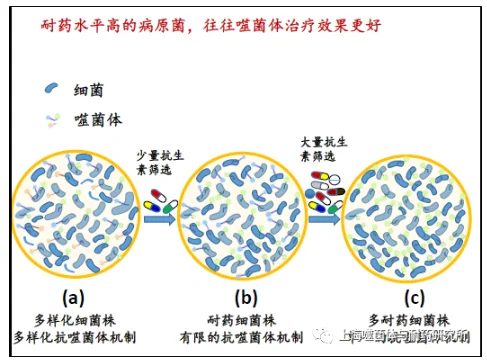
Figure 2. Bacterial heterogeneity and anti-phage mechanisms. Source: teaching material by Chen Liguang, as credited in the original article.
Where established antibiotic treatment remained available, an ethics committee had to weigh the evidence for both options. The source notes that a randomized comparison of antibiotics and phages might be more appropriate in that setting than the before-and-after, self-controlled design used by this program.
Practical capacity imposed further limits. At the time, the article estimated materials and labor at approximately RMB 400–600 for one phage screening procedure and approximately RMB 600 for one environmental spraying procedure. It stated that propagation and GMP preparation were also costly but had not yet been costed. The program relied on research funding and could not charge according to those estimated costs.
The work remained labor intensive. The Institute estimated capacity at about five concurrent participants. A patient typically required two to three treatment rounds; each round involved, on average, two to three screening procedures, one to two propagation procedures and one to two quality-control procedures. Staff also maintained the phage bank and conducted research. The source reports that the team had been working at near-full capacity, including weekends and holidays, since the second half of 2020.
Limited resources were therefore directed toward patients with resistant infections for which suitable medicines were unavailable.
16. What had the Institute done to improve the process?
Broadening eligibility
The source describes four phases of changes to the inclusion and exclusion criteria. Eligibility gradually broadened while retaining the focus on bacterial infections that had not responded to conventional antibiotic treatment.
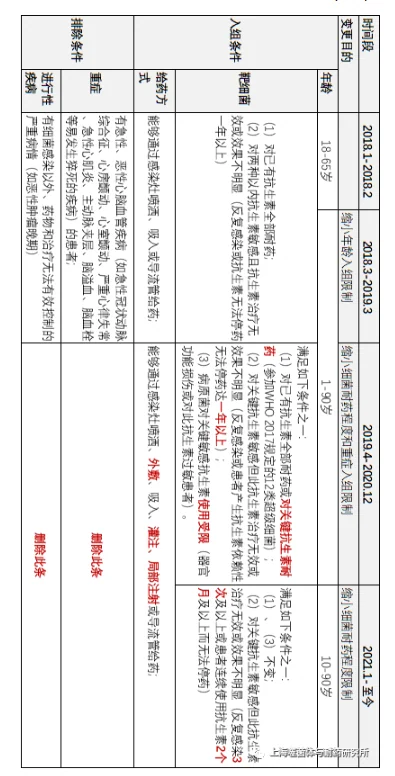
Table 1. Changes to inclusion and exclusion criteria in the Institute's phage therapy clinical trial.
Reducing waiting time
Over more than three years of practice, the team developed a bank targeting common resistant clinical pathogens and prepared ready-to-use GMP phage products in advance. Responsibilities were divided within multidisciplinary teams that followed each participant throughout the process.
The phage team included a research lead, clinical coordinator, screening group, production group and quality-control group. The clinical team included a research lead, treating and ward physicians, and nursing staff. Weekend and holiday coverage evolved from an on-call arrangement to scheduled duty.
Accommodating longer hospital stays
Bed turnover affects a hospital department's capacity, and shorter admissions can reduce patient costs. Phage research often required hospitalization for longer periods than routine treatment. Some participants also had severe or complex illness. The source recognizes the additional clinical and operational demands placed on the medical and laboratory teams who made those studies possible.